GUIDE · 2026-08-13
Tteok vs. Dduk: Siru, Spelling, and When They Matter
By Dduk Curator
Romanization splits one Korean word into tteok and dduk; siru vs. garae structures split the sweets themselves.
TL;DR
Romanization splits one Korean word into tteok and dduk; siru vs. garae structures split the sweets themselves.
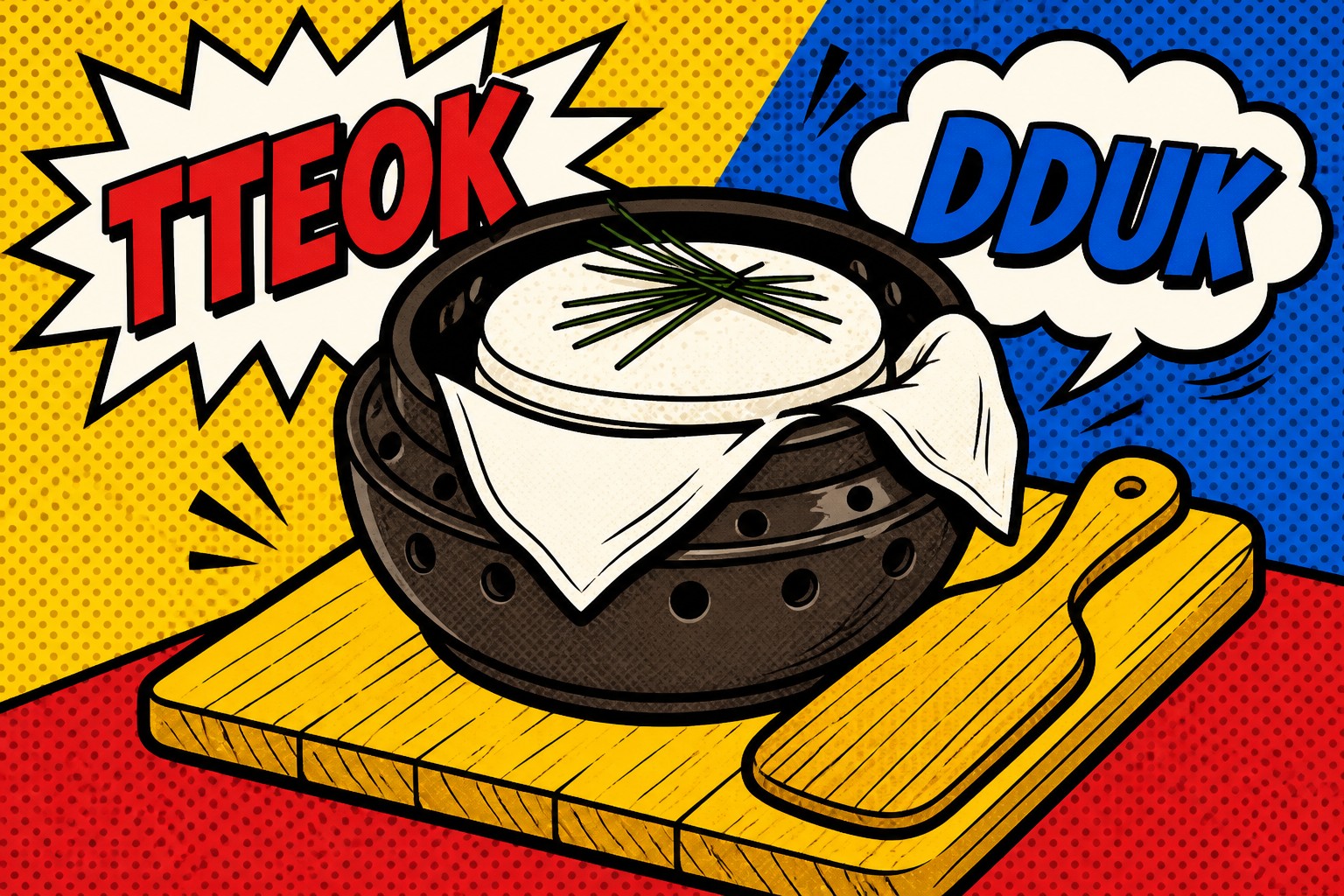
Tteok and dduk romanize the same Korean word. Revised Romanization prefers tteok; older McCune-Reischauer and menu shorthand produce dduk/duk. We keep both domains because search behaves that way: buyers google 'tteok recipe' and 'dduk shop near me' interchangeably, so both sites answer the same food with different entry points.
Within tteok, structure distinguishes: siru-tteok (steamed layered cake) like baekseolgi and mujigae; jjak-complete chigi-tteok (pounded) like injeolmi and garae; boiled tteok for soup; pan-fried hwajeon for flower offerings. Name tells method, not just flavor.
Network strategy: tteok.ai covers the full modern spectrum — street tteokbokki through cafe dduk — while dduk.ai leans heritage, pastel catering, and ceremonial context so SEO does not cannibalize. One catalog, two lenses.
For teaching, use tteok when discussing recipes and technique; use dduk when discussing tradition, ritual, and aesthetics. It is an editorial distinction, not a linguistic one, and it helps readers orient quickly.
If you are building a menu, pick one romanization and be consistent internally, but alias the other for search. Your sign can say tteok or dduk; your metadata speaks both.
More Korean food
Relevant pages on the two hub sites — recipes and a BBQ directory on bulgogi.ai, street rice cakes on tteokbokki.ai.
- bulgogi.ai — recipes & BBQ directory →Marinades, cuts, and a USA Korean BBQ map.
- tteokbokki.ai — street rice cakes →School-cart sauce, rose, mala, and tteok types.
- Everyday tteok shop staples →Garae and tteokguk slices you buy weekly, not for a wedding tower.