SCIENCE · 2026-08-09
Glutinous vs Non-Glutinous Rice (Nonglutinous) for Korean Dduk
By Dduk Curator
Glutinous vs non-glutinous rice — also searched as nonglutinous: chapssal vs mepssal, amylopectin, and which flour to use for songpyeon, injeolmi, and garae-tteok.
TL;DR
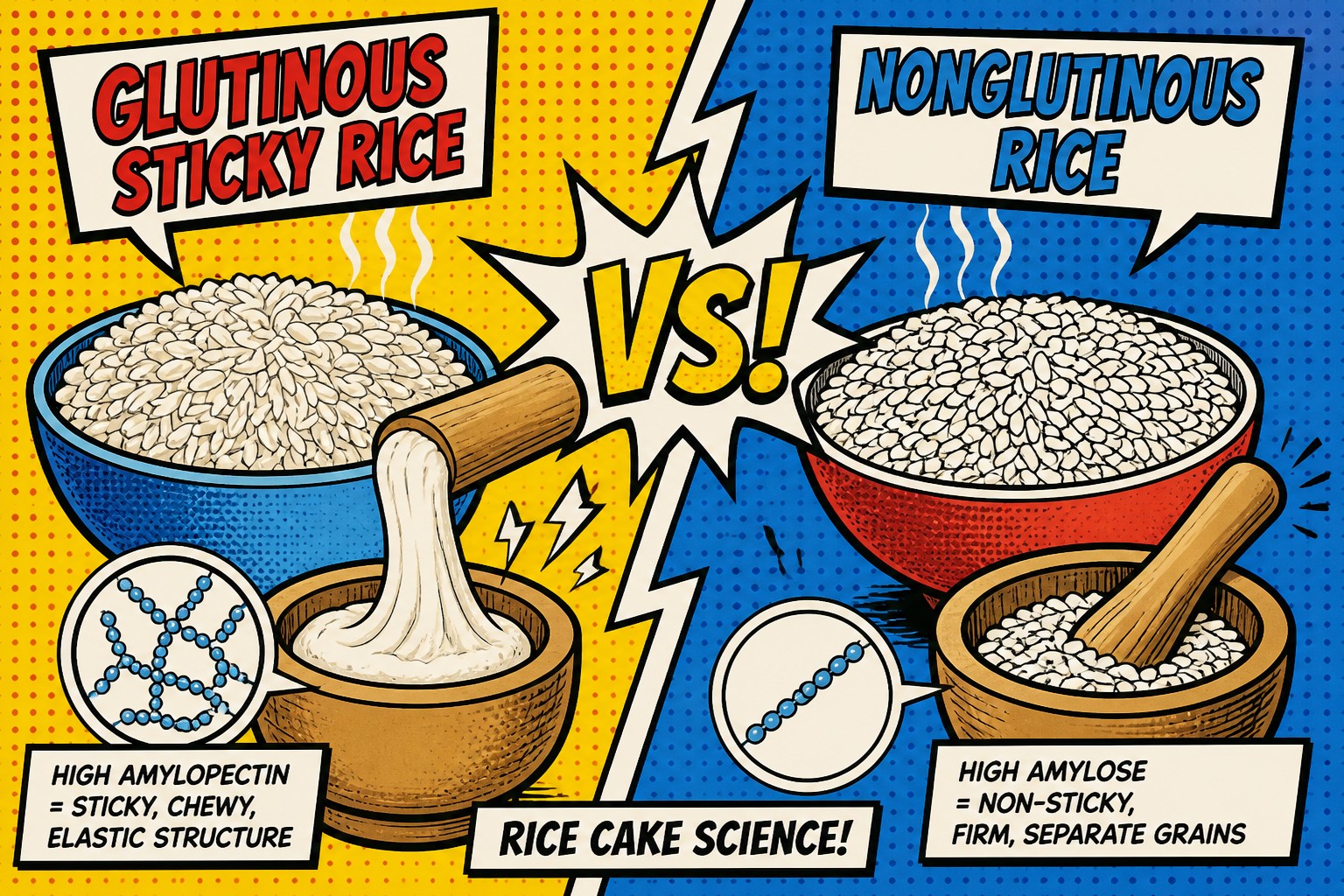
Glutinous rice (chapssal) is almost all amylopectin and stays elastic. Non-glutinous / nonglutinous rice (mepssal) has amylose, so it firms and slices. That ratio — not the English word “sticky” — decides whether your dduk stretches or snaps.
Glutinous rice (chapssal) is not gluttonous — it contains almost entirely amylopectin, a branched starch that traps water and stays elastic after cooking; non-glutinous rice (mepssal) blends amylopectin with amylose, which firms, slices cleanly, and resists stretch. That ratio dictates whether your dduk stretches or snaps.
Pure chapssal gives injeolmi and chaltteok their pillowy pull; pure mepssal gives garae-tteok and jeungpyeon their sliceable firmness. The art is blending: 70% mepssal + 30% chapssal for songpyeon that holds shape but still chews tenderly; ratio is the recipe.
Water is the other variable. Too much water in a siru batter steams cottony and collapses on cooling; too little bakes dry and cracks. Weigh everything: rice flour 300g to 180–200 ml water is a common starting hydrology, then adjust by 10 ml increments per humidity day — yes, weather matters.
Pounding aligns starch. Whether hand-chigi or machine, 8–12 minutes of folding and pounding at 65–75°C gelatinized temperature builds the network that gives garae its spring. Under-pounded dduk tears and looks ragged; over-pounded at too low temp goes rubbery.
Rescue logic: cracked siru? Steam 2 minutes longer covered. Slack, wet batter? Add 10% dry flour dusting and re-steam. Dense, jaw-heavy bite? You overdid chapssal or under-steamed; next time cut chapssal by 10% and extend pounding 2 minutes.
What “glutinous” does not mean. It does not mean the cake contains wheat gluten. Chapssal is gluten-free rice; the English word is a leftover of “gluey.” People with a wheat allergy still need to read a mixed bag — some garae-tteok for tteokbokki is wheat-mix on purpose. That shopping split lives on https://tteokbokki.ai/blog/wheat-vs-rice-tteok-for-tteokbokki/, not in this starch essay. Nonglutinous is the same word as non-glutinous: mepssal, regular short-grain rice, the flour that firms and slices.
Which flour for which cake. Injeolmi and chaltteok: nearly all glutinous (chapssal / chapssal-garu / mochiko in a US aisle). Songpyeon skin: a blend so the moon holds a pinch — often more non-glutinous than you expect if you came from mochi. Garae-tteok and tteokguk slices: non-glutinous leaning so they slice and swell instead of stretching into gum. Baekseolgi: non-glutinous rice flour, steamed, a clean crumb. If a bag only says “sweet rice flour,” that is glutinous. If it says “rice flour” with no sweet/chap/mochi word, assume non-glutinous and check the Hangul if you can.
FAQ — glutinous vs non-glutinous rice? Glutinous = chapssal = almost all amylopectin = stretch. Non-glutinous / nonglutinous = mepssal = amylose present = snap and slice. FAQ — is sticky rice the same as glutinous rice? In a grocery aisle, yes: “sweet rice,” “sticky rice,” and “glutinous rice” usually mean chapssal. FAQ — can I make songpyeon with only mochiko? You can; the seam will smear and the moon will read closer to a filled mochi. Use the blend if you want a clean pinch. The object comparison is /blog/songpyeon-vs-mochi/.
More Korean food
Relevant pages on the two hub sites — recipes and a BBQ directory on bulgogi.ai, street rice cakes on tteokbokki.ai.
- bulgogi.ai — recipes & BBQ directory →Marinades, cuts, and a USA Korean BBQ map.
- tteokbokki.ai — street rice cakes →School-cart sauce, rose, mala, and tteok types.
- Everyday tteok shop staples →Garae and tteokguk slices you buy weekly, not for a wedding tower.